


Community
Conversation
Presented in partnership with BeyondThis.org
Relationship Transformed - Guided Conversation for Couples
This conversation is designed for couples who are past the acute crisis and living in the long middle — people who are ready to talk about the relationship, not just the diagnosis. It won't be a lecture. It will be a facilitated conversation built around three movements:
• Who we each became — naming the identity shift for both the survivor and the partner, without pathologizing it
• The gap nobody talks about — the relational distance that grows quietly when both people are surviving, not connecting
• What "reclaiming" actually looks like — practical, honest, and grounded in lived experience, not theory
Brandon and Lindsey will share pieces of their own story as a bridge into the conversation — as an invitation for the room to go there, too. Participants can expect to leave with language for things they may have been feeling but couldn't name, and a clear sense of what structured support for the relationship can look like.
Who
Survivors and their partners.
When and Where
Connect via This Zoom Link
Thursday, June 4th from 4-6pm PST
About the Facilitators
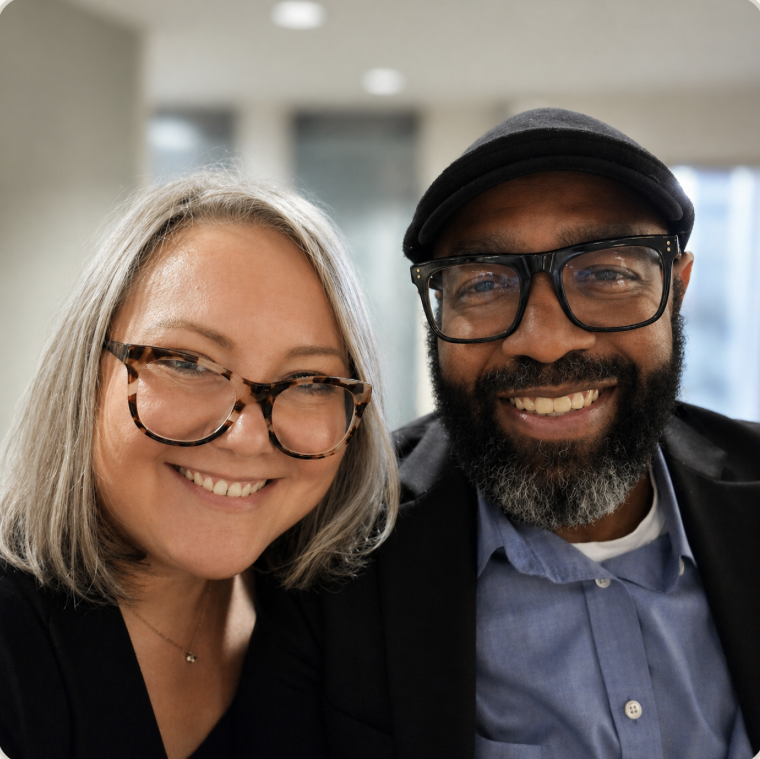
Brandon Taylor is a stroke survivor, founder of Beyond This, and a former dating and relationship coach with a decade of professional experience. In 2017, at age 35, Brandon experienced an ischemic stroke resulting in 11 infarcts affecting his brainstem, frontal lobe, and both hemispheres. He co-facilitates peer support programming for stroke, TBI, and acquired disability populations and brings a survivor's perspective — and a coach's instincts — to every room he walks into.
Lindsey Taylor is Brandon's wife, carepartner, and co-founder of Beyond This, where she leads program design and operations. She brings the organizational infrastructure and the particular perspective of someone who has navigated the shift from partner to carepartner firsthand.
Together, they built Beyond This because they needed it and it didn't exist — grounded in the belief that the relationship is its own unit of care, and that most couples navigating life after disability never get support designed for both of them at once.